Skej
Assistants
Product
Solutions
For Teams
Switch from Calendly
Pricing
← Back to Blog
Calendly vs. Doodle: Which Scheduling Tool Is Right for You?

Calendly vs. Doodle: Which Scheduling Tool Is Right for You?

The Skej Team•2025-04-30

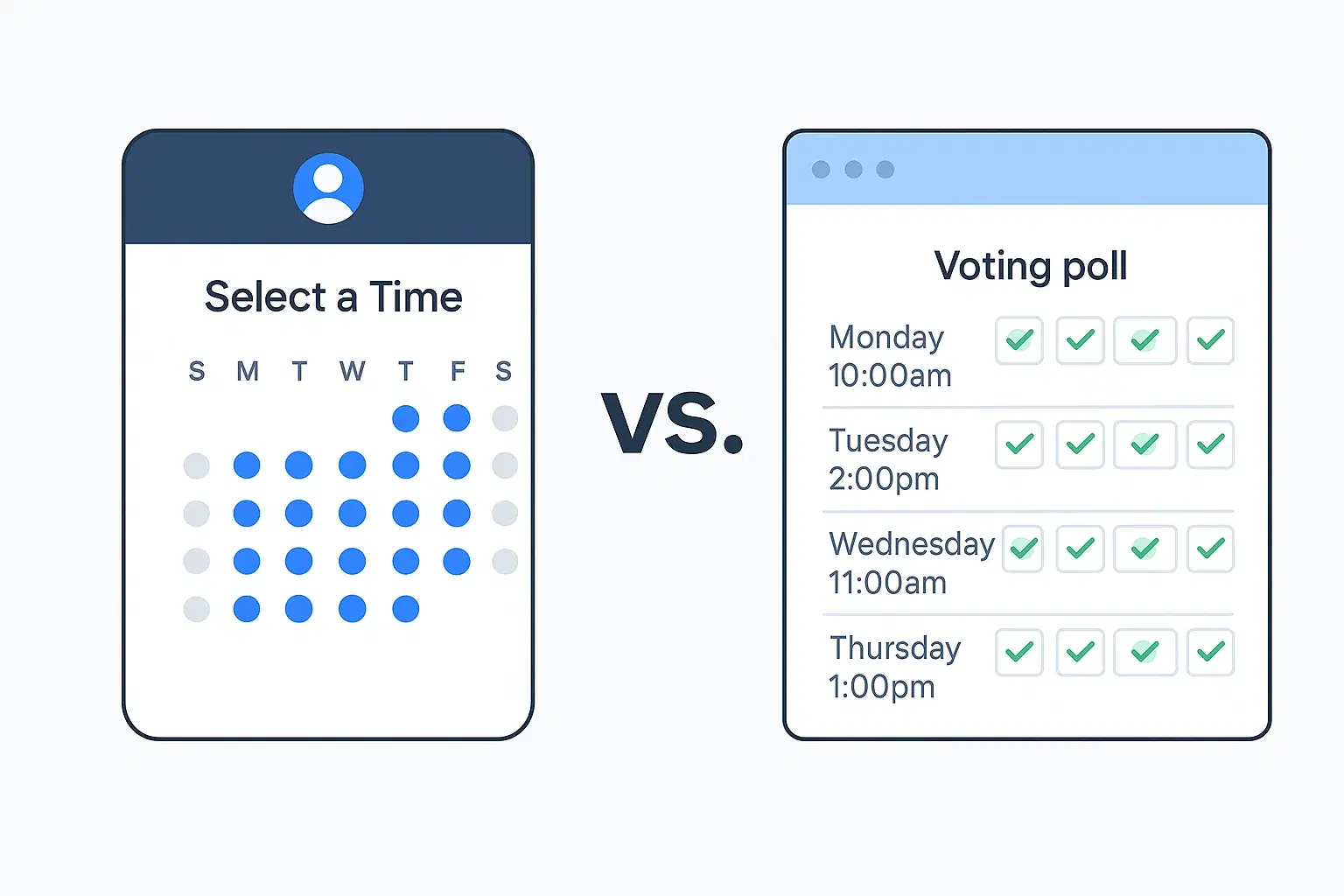
If you've ever tried to schedule a meeting with multiple people, you've probably encountered tools like Calendly or Doodle.

Both tools help reduce the endless back-and-forth of coordinating availability — but they approach the problem very differently.

  • Calendly focuses on structured booking links.
  • Doodle focuses on group availability polls.

Depending on the type of meeting you're scheduling, one may work much better than the other.

Let’s break down how they compare.

What Is Calendly?

Calendly is a scheduling tool that lets people book meetings directly into your calendar through a personalized booking link.

Instead of emailing back and forth about availability, you simply send someone your Calendly link and they choose a time that works.

Calendly connects to calendars like Google Calendar and Outlook and automatically shows available time slots.

You can configure:

  • Working hours
  • Meeting durations (15 min, 30 min, etc.)
  • Buffers between meetings
  • Maximum meetings per day
  • Automated workflows

Calendly works best for

  • Sales calls
  • Product demos
  • Customer onboarding
  • Recruiting interviews
  • Any 1:1 meeting where someone can pick a time.

It’s designed to make booking meetings fast and structured.

What Is Doodle?

Doodle takes a different approach. Instead of offering a booking link, it lets you create a poll with multiple time options.

Participants then vote on which times work for them, and the organizer selects the final meeting time.

This approach is useful when you’re coordinating with people whose calendars you can’t see.

Doodle works best for

  • Group meetings
  • Cross-organization coordination
  • Event planning
  • Committee scheduling
  • Situations where availability is unknown

Rather than automatically booking meetings, Doodle focuses on finding consensus across a group.

Calendly vs Doodle: Key Differences

FeatureCalendlyDoodle
Scheduling methodBooking linksPoll-based voting
Best for1:1 meetingsGroup scheduling
AutomationFully automatedManual confirmation
Calendar integrationDeep integrationsLimited calendar sync
Meeting confirmationInstantAfter poll results
Setup effortVery lowModerate

When Calendly Is the Better Choice

Calendly works best when speed and automation are the priority.

You should use Calendly if:

  • You schedule lots of 1:1 meetings
  • You want people to book directly into your calendar
  • You rely on integrations with CRMs, video tools, or payment systems
  • You want meetings confirmed automatically

This makes it especially popular with sales teams, recruiters, and consultants.

When Doodle Is the Better Choice

Doodle is more useful when scheduling large groups with uncertain availability.

You should use Doodle if:

  • You're coordinating multiple participants
  • You don’t have visibility into everyone's calendar
  • You need group consensus before confirming a meeting
  • You're organizing meetings across multiple organizations

Doodle is common in academic, nonprofit, and committee-style environments.

Limitations of Both Tools

Despite their popularity, both Calendly and Doodle have limitations.

Calendly can feel rigid when meetings involve negotiation or back-and-forth conversation. Sending booking links sometimes creates friction in more conversational email threads.

Doodle, meanwhile, requires participants to vote in polls and still often requires manual coordination after the poll closes.

Neither tool truly acts like an assistant that coordinates scheduling for you.

A Different Approach: AI Scheduling Assistants

Newer scheduling tools are beginning to approach the problem differently.

Instead of relying on booking links or polls, AI scheduling assistants coordinate meetings automatically inside conversations.

For example, tools like Skej allow you to simply CC an AI assistant on an email thread. The assistant proposes times, coordinates with participants, and books the meeting automatically.

This approach removes the need for links or polls entirely and can feel closer to having a human assistant manage scheduling.

Product

Email AssistantBooking LinkTextingSlack & TeamsFollow-UpsAdd to CalendarSmart Options

Solutions

For InvestorsFor FoundersFor SalesFor RecruitersSwitch from Calendly

For Teams

Internal MeetingsSlack & TeamsSecurity & ComplianceIT Admin ControlsCustom Assistants

Company

CompanyUpdatesBlogSimon BaumerContact

Resources

PricingFAQTermsPrivacyCookiesTrust Center

Get Started

Product

Email AssistantBooking LinkTextingSlack & TeamsFollow-UpsAdd to CalendarSmart Options

Solutions

For InvestorsFor FoundersFor SalesFor RecruitersSwitch from Calendly

For Teams

Internal MeetingsSlack & TeamsSecurity & ComplianceIT Admin ControlsCustom Assistants

Company

CompanyUpdatesBlogSimon BaumerContact

Resources

PricingFAQTermsPrivacyCookiesTrust Center

Get Started

Designed by 3Gen Internet Corporation in New York

Skej
Assistants
Product
Solutions
For Teams
Switch from Calendly
Pricing
← Back to Blog
Calendly vs. Doodle: Which Scheduling Tool Is Right for You?

Calendly vs. Doodle: Which Scheduling Tool Is Right for You?

The Skej Team•2025-04-30

If you've ever tried to schedule a meeting with multiple people, you've probably encountered tools like Calendly or Doodle.

Both tools help reduce the endless back-and-forth of coordinating availability — but they approach the problem very differently.

  • Calendly focuses on structured booking links.
  • Doodle focuses on group availability polls.

Depending on the type of meeting you're scheduling, one may work much better than the other.

Let’s break down how they compare.

What Is Calendly?

Calendly is a scheduling tool that lets people book meetings directly into your calendar through a personalized booking link.

Instead of emailing back and forth about availability, you simply send someone your Calendly link and they choose a time that works.

Calendly connects to calendars like Google Calendar and Outlook and automatically shows available time slots.

You can configure:

  • Working hours
  • Meeting durations (15 min, 30 min, etc.)
  • Buffers between meetings
  • Maximum meetings per day
  • Automated workflows

Calendly works best for

  • Sales calls
  • Product demos
  • Customer onboarding
  • Recruiting interviews
  • Any 1:1 meeting where someone can pick a time.

It’s designed to make booking meetings fast and structured.

What Is Doodle?

Doodle takes a different approach. Instead of offering a booking link, it lets you create a poll with multiple time options.

Participants then vote on which times work for them, and the organizer selects the final meeting time.

This approach is useful when you’re coordinating with people whose calendars you can’t see.

Doodle works best for

  • Group meetings
  • Cross-organization coordination
  • Event planning
  • Committee scheduling
  • Situations where availability is unknown

Rather than automatically booking meetings, Doodle focuses on finding consensus across a group.

Calendly vs Doodle: Key Differences

FeatureCalendlyDoodle
Scheduling methodBooking linksPoll-based voting
Best for1:1 meetingsGroup scheduling
AutomationFully automatedManual confirmation
Calendar integrationDeep integrationsLimited calendar sync
Meeting confirmationInstantAfter poll results
Setup effortVery lowModerate

When Calendly Is the Better Choice

Calendly works best when speed and automation are the priority.

You should use Calendly if:

  • You schedule lots of 1:1 meetings
  • You want people to book directly into your calendar
  • You rely on integrations with CRMs, video tools, or payment systems
  • You want meetings confirmed automatically

This makes it especially popular with sales teams, recruiters, and consultants.

When Doodle Is the Better Choice

Doodle is more useful when scheduling large groups with uncertain availability.

You should use Doodle if:

  • You're coordinating multiple participants
  • You don’t have visibility into everyone's calendar
  • You need group consensus before confirming a meeting
  • You're organizing meetings across multiple organizations

Doodle is common in academic, nonprofit, and committee-style environments.

Limitations of Both Tools

Despite their popularity, both Calendly and Doodle have limitations.

Calendly can feel rigid when meetings involve negotiation or back-and-forth conversation. Sending booking links sometimes creates friction in more conversational email threads.

Doodle, meanwhile, requires participants to vote in polls and still often requires manual coordination after the poll closes.

Neither tool truly acts like an assistant that coordinates scheduling for you.

A Different Approach: AI Scheduling Assistants

Newer scheduling tools are beginning to approach the problem differently.

Instead of relying on booking links or polls, AI scheduling assistants coordinate meetings automatically inside conversations.

For example, tools like Skej allow you to simply CC an AI assistant on an email thread. The assistant proposes times, coordinates with participants, and books the meeting automatically.

This approach removes the need for links or polls entirely and can feel closer to having a human assistant manage scheduling.

Product

Email AssistantBooking LinkTextingSlack & TeamsFollow-UpsAdd to CalendarSmart Options

Solutions

For InvestorsFor FoundersFor SalesFor RecruitersSwitch from Calendly

For Teams

Internal MeetingsSlack & TeamsSecurity & ComplianceIT Admin ControlsCustom Assistants

Company

CompanyUpdatesBlogSimon BaumerContact

Resources

PricingFAQTermsPrivacyCookiesTrust Center

Get Started

Product

Email AssistantBooking LinkTextingSlack & TeamsFollow-UpsAdd to CalendarSmart Options

Solutions

For InvestorsFor FoundersFor SalesFor RecruitersSwitch from Calendly

For Teams

Internal MeetingsSlack & TeamsSecurity & ComplianceIT Admin ControlsCustom Assistants

Company

CompanyUpdatesBlogSimon BaumerContact

Resources

PricingFAQTermsPrivacyCookiesTrust Center

Get Started

Designed by 3Gen Internet Corporation in New York