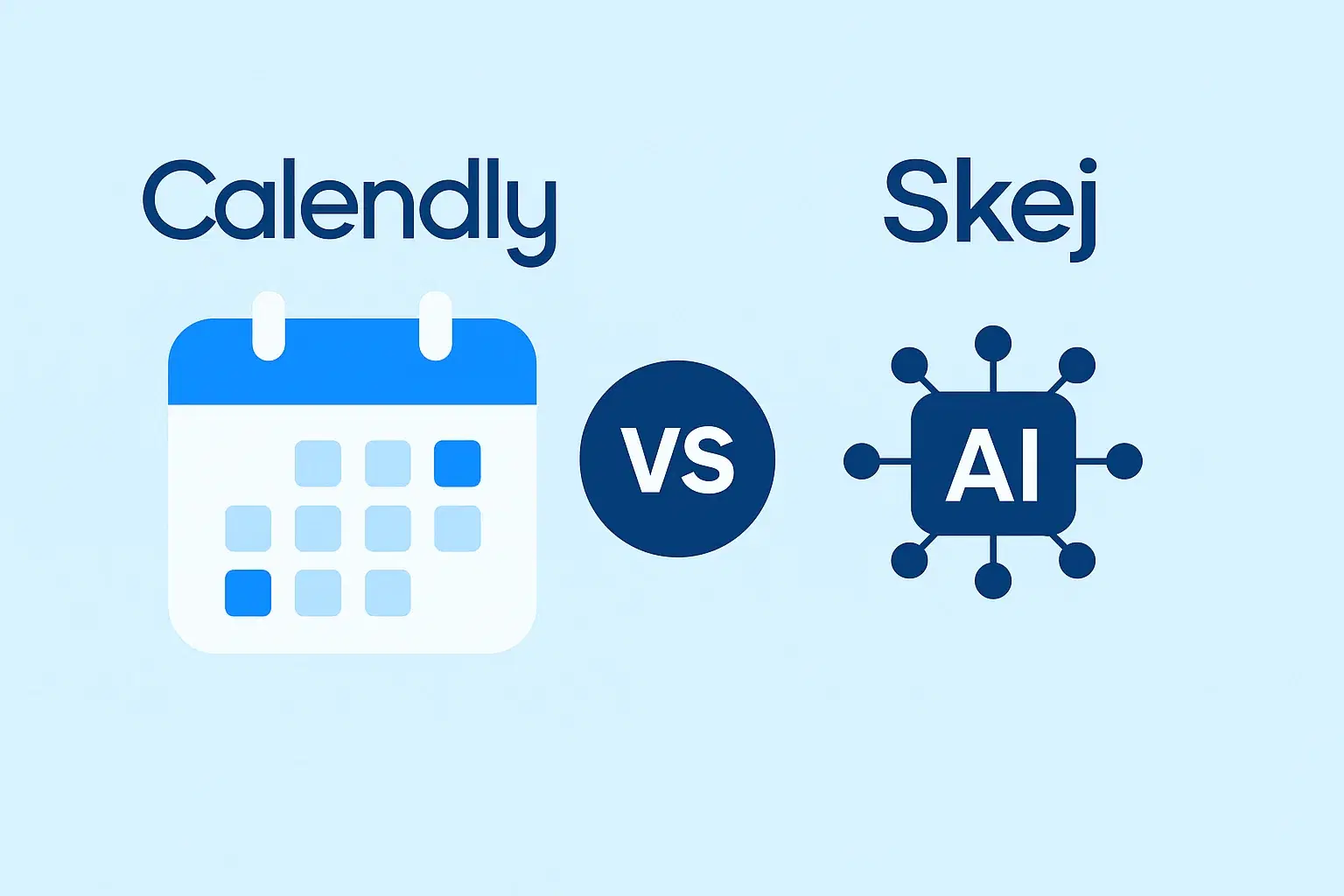
Skej vs Calendly: Which Scheduling Tool Is Better?
If you're exploring scheduling tools, you've probably come across Calendly. For years, it has been one of the most popular ways to share booking links and let people schedule time on your calendar.
But while Calendly works well in many situations, it isn’t always the most natural way to coordinate meetings — especially in conversations with clients, investors, candidates, or colleagues.
This is why many professionals start looking for Calendly alternatives.
One of the newer options is Skej, an AI-powered scheduling assistant that can coordinate meetings automatically inside real conversations.
Instead of relying only on booking links, Skej acts like a digital assistant that can propose times, coordinate availability, and confirm meetings on your behalf.
Let’s break down how Skej and Calendly compare so you can decide which tool fits your workflow best.
What Is Skej?
Skej is an AI scheduling assistant designed to coordinate meetings automatically.
Like Calendly, Skej supports booking links that allow people to choose available times from your calendar. But Skej goes further by acting like an assistant that can schedule meetings conversationally inside email, Slack, SMS, or WhatsApp.
You can simply CC skej@skej.com on an email thread, or message Skej directly, and it will handle the scheduling for you.
Skej can:
- check your calendar and scheduling preferences
- suggest meeting times automatically
- coordinate with participants in the conversation
- adjust for time zones
- confirm meetings and send calendar invites
- handle rescheduling or cancellations
Because it works conversationally, Skej is especially useful in situations where meetings happen naturally within ongoing discussions.
What Is Calendly?
Calendly is a scheduling platform built primarily around booking links.
You configure your availability, meeting types, and scheduling rules. Then you share a personalized link that allows others to choose a time that works for them.
Calendly integrates with tools such as:
- Google Calendar
- Outlook
- Zoom
- Salesforce
- payment platforms
It works particularly well when people are booking meetings through websites, forms, or inbound requests.
Many companies use Calendly for:
- sales demo bookings
- customer onboarding calls
- consultation scheduling
- coaching sessions
Calendly’s strength is making it easy for people to self-serve and book time directly.
Skej vs Calendly: Feature Comparison
| Feature | Skej | Calendly |
|---|---|---|
| Booking links | ✅ | ✅ |
| AI scheduling assistant | ✅ | ❌ |
| Conversational scheduling | ✅ | ❌ |
| Works inside email threads | ✅ | ❌ |
| Slack / SMS scheduling | ✅ | Limited |
| Automatic coordination with multiple participants | ✅ | Limited |
| Best for | Relationship-driven scheduling | Self-service booking |
Why People Look for Calendly Alternatives
Calendly is a powerful scheduling tool, but it doesn't always fit every situation.
Common reasons professionals look for alternatives include:
- scheduling links can feel impersonal in certain conversations
- booking links don’t work well in email threads with multiple participants
- some meetings require negotiation rather than fixed availability
- professionals want scheduling to happen automatically instead of waiting for someone to pick a time
This is where conversational scheduling tools like Skej offer a different approach.
When Skej Is the Better Choice
Skej works especially well when scheduling happens naturally inside conversations.
Many professionals prefer Skej when they:
- coordinate meetings with clients, investors, or executives
- work across email, Slack, and messaging platforms
- frequently schedule group meetings
- want scheduling to feel more personal
- want meetings booked automatically without waiting for someone to click a link
Because Skej acts like an assistant, it can manage the back-and-forth automatically.
When Calendly Is the Better Choice
Calendly is still an excellent option in situations where self-service scheduling is the goal.
Calendly works best when:
- you want a public booking page
- leads schedule meetings through your website
- you offer multiple event types
- you collect payments or run consultations
- you rely heavily on CRM integrations
For structured inbound scheduling, Calendly remains a strong solution.
Final Thoughts
Calendly and Skej both solve the same core problem: helping people schedule meetings faster.
But they approach the problem in different ways.
Calendly focuses on booking links and self-service scheduling.
Skej combines booking links with an AI scheduling assistant that can coordinate meetings automatically inside real conversations.
For transactional scheduling, Calendly works very well.
But for professionals who want meetings to be coordinated automatically — without relying entirely on links — Skej offers a more flexible approach.
Make scheduling easier with Skej
Skej handles the back-and-forth while you focus on what's important.
Start Scheduling for FreeFree trial · No credit card required