Static Scheduling Links Are Outdated — Here’s Why AI-Powered Scheduling Links Are the Future
Scheduling links changed the game when they arrived over a decade ago. Tools like Calendly, SavvyCal, and HubSpot made it easy to share your availability without endless back-and-forth. And to their credit, traditional scheduling links do automatically update based on your connected calendars, buffers, and preferences.
But here’s the problem:
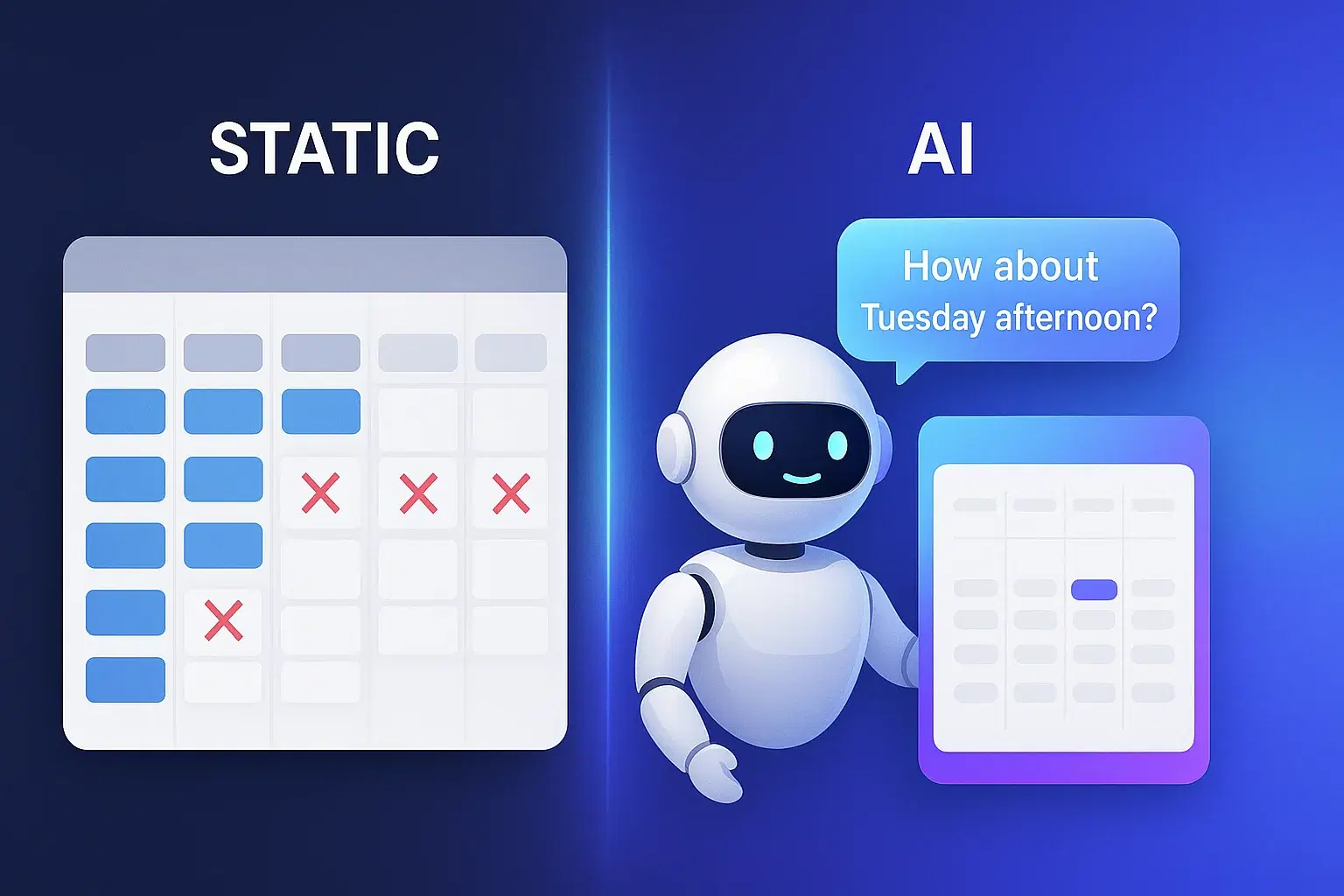
Even with real-time updates, static scheduling links only reflect one side — your availability.
They don’t help the other person.
They don’t understand context.
They can’t adapt when there’s no overlap.
And they can’t collaborate to actually find a time.
In 2025, the way people schedule has evolved. Calendars are more complex, teams are distributed, and everyone uses different tools to manage their time. The world needs a scheduling link that’s more flexible, more conversational, and more mutual.
That’s where AI-powered scheduling links come in.
Where Static Scheduling Links Fall Short
Static scheduling pages, no matter how polished they look, still operate on a one-way model:
“Here’s when I’m free. Hope something works for you.”
Even when they update in real time, they’re limited to showing a grid of your availability.
Here’s what they still can’t do:
1. They can’t collaborate around someone else’s schedule
If your times don’t align with theirs, the link becomes a dead end.
2. They can’t handle how people actually share availability
Most people don’t live inside your scheduling link. They respond with:
- “Free after lunch.”
- “Wednesday morning works.”
- A screenshot of their calendar.
- A link to their scheduling page.
- A few windows typed out.
Static links can’t do anything with that.
3. They can’t bridge gaps or negotiate constraints
If availability doesn’t overlap, they don’t help solve it.
They just show:
“No times available.”
AI-Powered Scheduling Links: Flexible, Conversational, Collaborative
Skej’s AI scheduling links include all the features people expect:
- Real-time availability based on all your calendars
- Buffers, preferences, and meeting types
- Multiple scheduling links for different types of events
- Custom URLs
- Configurable meeting durations
But the major difference is this:
Every Skej scheduling link includes your AI assistant, right inside the page.
This transforms scheduling from a one-way availability dump into a collaborative conversation.
What Makes Skej’s AI Scheduling Links Different
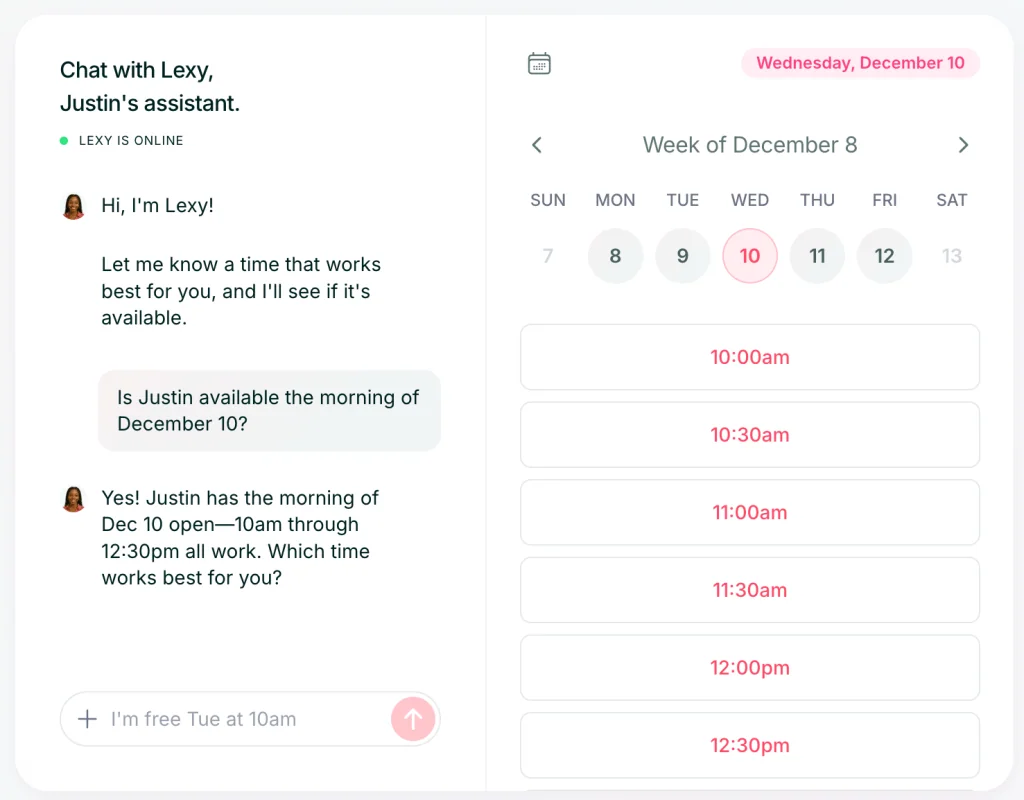
1. Contacts can talk to your assistant directly on the scheduling page
They don’t have to hunt through a grid of times. They can simply say:
- “I’m free Tuesday afternoon.”
- “Anything earlier?”
- “Next week works better.”
Your assistant interprets it instantly and finds the best mutual time.
This feels like scheduling with a real human assistant, not with a form.
2. Contacts can share their availability in any format
This is where Skej becomes dramatically more flexible than any traditional scheduling tool.
Your contact can:
- Paste their own Calendly link → Skej finds mutual times
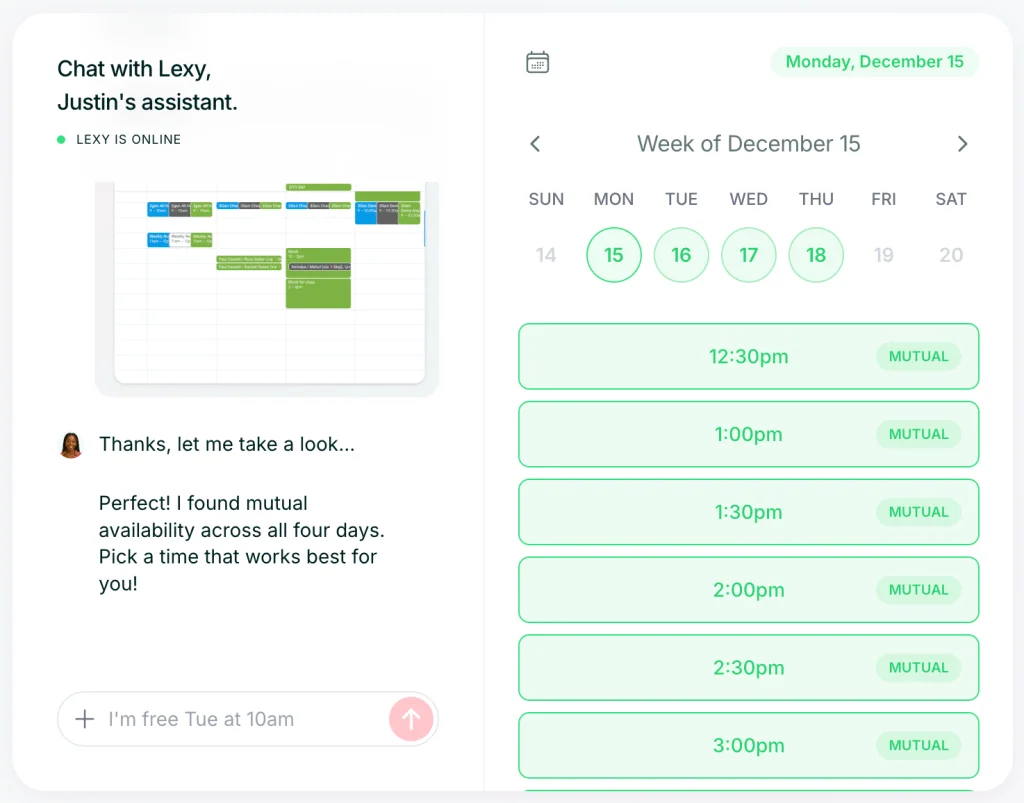
- Upload a screenshot of their calendar → Skej reads it and extracts availability
- Write a few windows of time → Skej filters for overlaps
- Connect their own calendars → mutual slots appear automatically
Your scheduling link stops being a “here’s my availability” page and becomes a true mutual availability finder.
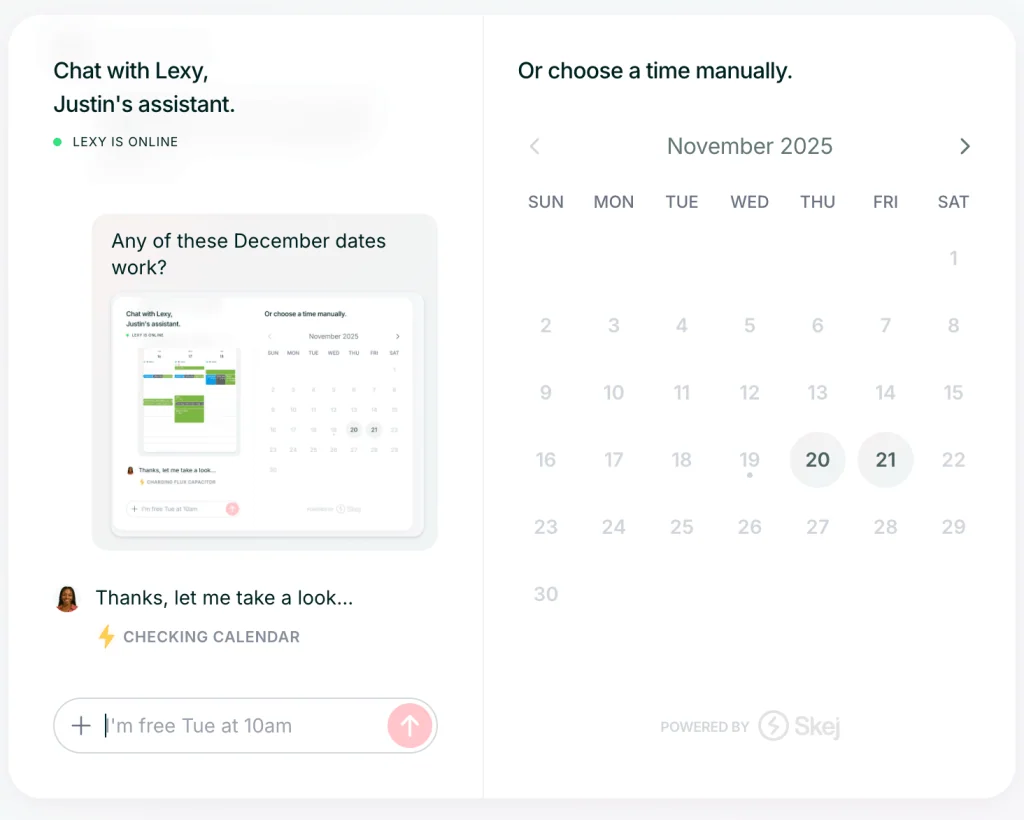
3. If the visitor is a Skej user, the page highlights mutual availability automatically
No searching. No comparing calendars.
It simply shows all times that work for both of you.
4. If there’s no overlap, Skej doesn’t hit a dead end
Static scheduling links shrug:
“No times available.”
Skej adapts:
- Expands the search window
- Suggests alternatives
- Asks about constraints
- Adjusts based on preferences
It behaves like a real assistant trying to make something happen.
5. It removes the awkwardness of forcing someone to fit into your calendar
Traditional scheduling links feel like:
“Here’s my link. Pick a time that works for me.”
Skej feels like:
“Let’s find a time that works for both of us, however you want to share your availability.”
It’s more collaborative, more respectful, and simply a better experience.
Why AI Scheduling Links Matter Now
Scheduling is harder today than it was five years ago. People juggle:
- multiple calendars
- remote teams
- different tools
- shifting availability
- last-minute changes
- screenshots from mobile
- partial responses like “can do Thurs morning”
- no overlapping windows
- reschedules
- different time zones
Static links weren’t designed for this.
AI was.
Skej Scheduling Links: A Smarter, More Human Way to Book Meetings
Skej is the first scheduling link that:
- Understands their availability
- Reads screenshots
- Integrates with their scheduling links
- Highlights mutual availability
- Adapts conversationally
- Handles conflicts
- Avoids dead ends
- Actually helps people find a time
- Respects both sides
In other words:
The first scheduling link designed for how people actually schedule today.
Ready to Try AI-Powered Scheduling?
Static scheduling links made booking meetings easier. Skej makes it effortless. It’s time to upgrade.
Claim your free scheduling page and experience the future of scheduling:
👉 Sign Up Today
Make scheduling easier with Skej
Skej handles the back-and-forth while you focus on what's important.
Start Scheduling for FreeFree trial · No credit card required